AI and Remote Patient Monitoring — The Future of Chronic Disease Management in Egypt and Saudi Arabia
Quick answer
Remote patient monitoring (RPM) combined with artificial intelligence is changing how diabetes, hypertension and heart disease are managed. It can provide information between appointments, helping care teams identify changes that may need attention. It is not a continuously staffed emergency service unless explicitly agreed.
Remote patient monitoring (RPM) combined with artificial intelligence is changing how diabetes, hypertension and heart disease are managed. It can provide information between appointments, helping care teams identify changes that may need attention. It is not a continuously staffed emergency service unless explicitly agreed.
For Egypt and Saudi Arabia, where chronic diseases are a leading cause of illness and healthcare spending, this shift is one of the most important innovations in digital health.
The chronic disease challenge
The World Health Organization reports that noncommunicable diseases accounted for about 75% of non-pandemic-related deaths globally in 2021. Chronic care needs extend beyond individual appointments. Common challenges include:
- Visits are infrequent, so uncontrolled blood sugar or blood pressure goes unnoticed for weeks.
- Adherence drops once patients leave the clinic.
- Fragmented follow-up can lead to duplicated tests or missed opportunities to review treatment.
- Complications are expensive: potentially avoidable admissions can be a substantial cost; comparisons require local programme data.
What is remote patient monitoring?
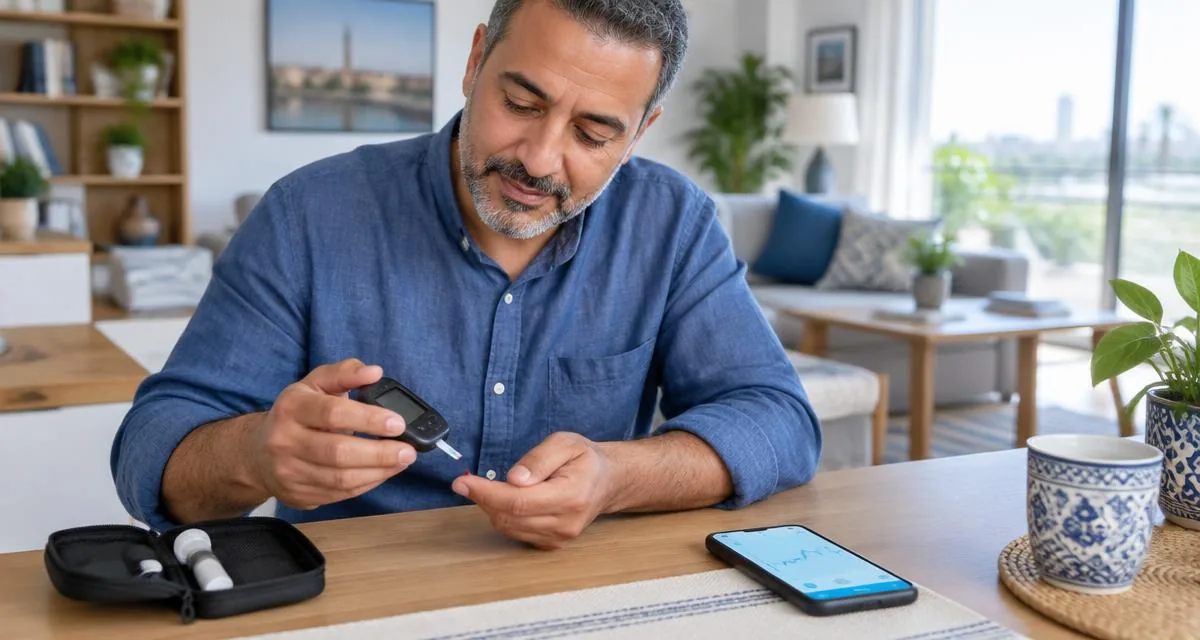
Remote patient monitoring uses connected devices and apps to collect health data at home and share it with a care team. Typical data includes:
- Blood glucose (glucometer or continuous glucose monitor)
- Blood pressure and heart rate
- Weight, oxygen saturation and temperature
- Medication intake and symptoms reported in an app
Readings flow into a dashboard where nurses and doctors review trends, not single numbers.
Where AI adds value
AI-assisted tools can help clinicians interpret patterns in readings; they do not make autonomous treatment decisions. In a well-designed chronic care programme it can:
- Flag risk early — detect patterns such as rising fasting glucose or night-time hypertension and alert the care team.
- Prioritise patients — rank who needs a call today, so clinicians spend time where it matters.
- Personalise nudges — send reminders and education in Arabic or English, timed to each patient's routine.
- Optimise prescriptions and lab tests — highlight duplicated or unnecessary tests and support guideline-based treatment adjustments.
- Predict non-adherence — identify patients likely to stop treatment and trigger human follow-up.
AI supports clinicians; it does not replace them. Every treatment decision stays with a licensed doctor.
The connected care model: virtual + on-site
An illustrative hybrid programme can combine digital monitoring with in-person care. The schedule below is an example, not a clinical recommendation; a treating clinician sets the frequency:
| Layer | What happens | Who leads |
|---|---|---|
| Daily | Readings captured at home, AI flags exceptions | Patient + platform |
| Weekly | Nurse reviews trends, coaches by phone or chat | Care coordinator |
| As needed | Telemedicine consult to adjust treatment | Physician |
| Quarterly | Home visit, lab tests collected at home | Doctor + nurse |
This hybrid model aims to maintain engagement and avoid unnecessary visits. Results depend on the condition, staffing and programme design.
Benefits for patients, payers and employers
- Patients: support for glucose and blood pressure management, with less travel for suitable follow-ups; outcomes vary.
- Insurers and payers: a framework to evaluate potentially avoidable admissions and appropriate use of medicines and tests, rather than assume savings.
- Employers: a way to support employee health and measure sick leave and medical spending against a baseline.
- Pharma patient support programmes: measurable adherence and real-world outcomes data.
What to look for in a remote monitoring programme
- Devices that are simple, validated and Bluetooth-connected
- An Arabic and English interface designed for older users
- Named clinicians who review data, not just an app
- Data privacy aligned with local regulations, including Saudi Arabia's Personal Data Protection Law and Egypt's Personal Data Protection Law
- Clear escalation rules to home visits and emergency care
Hospitalia's chronic care approach
Hospitalia combines telemedicine, home visits, home lab collection and structured follow-up into one chronic disease management service. The goal is simple: the right test, the right prescription and the right visit at the right time — and nothing unnecessary.
For organisational and partnership inquiries, not patient home-care bookings in Saudi Arabia.
Contact the partnerships teamFrequently asked questions
What is remote patient monitoring used for?
Most commonly diabetes, hypertension, heart failure, COPD and post-discharge follow-up.
Is AI safe in healthcare?
When used to support licensed clinicians, with transparent rules and data protection, AI may help identify risk patterns; safety depends on validation, oversight and the intended use. It should never make treatment decisions alone.
Do elderly patients manage the devices?
Some can, with accessible devices and training. Others need caregiver support. Sharing readings with family requires consent and suitable access controls.
Does remote monitoring reduce healthcare costs?
It targets the biggest cost drivers in chronic disease: complications, emergency visits and unnecessary tests.