Egypt Is Aging. Is Our Healthcare System Ready?
Quick answer
Egypt's elderly population is growing faster than the system built to care for it. Global research on aging care points to five structural shifts — and most of them are already being built in Egypt today.
The system is failing Egypt's aging population
Somewhere in Cairo right now, a 68-year-old woman with uncontrolled diabetes is waiting three weeks for a follow-up appointment she may never keep. Her daughter — working two shifts, raising three children — is the one managing the insulin, coordinating lab results, and absorbing the cognitive load of a system that was never designed to support either of them.
This is not an isolated story. It is Egypt's daily reality, and its scale is accelerating. According to CAPMAS figures reported by Ahram Online, Egypt's elderly population reached 10.2 million in 2026 — 9.3% of the total population — up from 9.8 million the year prior, and Al-Ahram reports the figure is projected to reach 22 million by 2050. Yet healthcare infrastructure remains oriented around acute intervention: hospitals built for crisis, not continuity; systems designed for episodes, not lives.
A landmark EY Global Consumer Health Survey (2025), which polled 4,500 consumers aged 50 and above across six countries, captured the scale of this disconnect: nearly 60% of global respondents rated the system of care as they age as fair or poor — worse than their evaluation of the overall healthcare system. These are consumers who track their steps, calories, and sleep cycles. And they are telling the world's healthcare systems, plainly: you are not building what we need.
In Egypt, the gap between what patients expect and what the system delivers is not a gap. It is a chasm — and closing it is the work Hospitalia was built to do.
What Egyptian patients actually want as they age
Ask an elderly Egyptian patient where they want to receive care and the answer is almost always the same: fi el beit — at home. Home is where dignity lives. It is where the family gathers, where familiar sounds and scents persist, where the weight of a hospital gown is replaced by the comfort of one's own room. This cultural preference is not sentiment. It is a clinical signal.
Global research confirms what Egyptian families have always known intuitively. The EY survey found that nearly 75% of global respondents would likely take advantage of a smart home equipped with sensors and devices to monitor and alert their healthcare team and family to potential emergencies. This is the dominant expectation of the next generation of healthcare consumers — not a fringe preference.
The demand for technology-enabled home care is equally clear across the same research:
- 67% of respondents were moderately to extremely likely to use digital technologies that collect health data — such as blood pressure readings — to send to their healthcare team.
- 64% were open to digitally enabled healthcare that provides both virtual and in-person options.
- 56% said they were open to voice-enabled digital assistants that offer reminders to take medicine, drink water, exercise, and help make appointments.
- 49% indicated openness to AI technologies that analyze their health data to identify health risks as they age, as well as suitable treatments.
Transpose these numbers onto Egypt's context: a country where smartphone ownership and messaging-app use are high even among older adults, and where the cultural role of the family caregiver creates a natural relay network for digital health interventions. Industry reporting values Egypt's telemedicine market at roughly $170 million in 2022, projected to reach about $717 million by 2030. The infrastructure of demand already exists. What is missing is the structured delivery model.
Egyptian patients aged 50 and above are not asking for more hospital beds. They are asking for a system that meets them where they are — in their homes, in their daily routines, with technology that feels like a family member, not a machine. In the EY research, hospital-at-home programs appealed to 70% of global respondents, with top priorities including support for daily living activities, medication assistance, nursing care, and home safety equipment. The shift is not from care to no-care. It is from institution to integration.
The invisible burden: Egypt's family caregivers
Behind every aging Egyptian patient is a family member — typically a daughter, a daughter-in-law, or a wife — who has become an informal, unpaid, untrained nurse. She coordinates appointments, manages polypharmacy, interprets discharge summaries written in clinical language she was never trained to understand, and absorbs the psychological weight of watching someone she loves decline in a system that offers her no map.
Globally, the EY research found that one in five caregiver respondents spends more than 31 hours a week caring for a loved one, with 80% of caregivers spending at least 5 hours a week on their duties. In Egypt, where institutional elder care is culturally stigmatized and the formal caregiver workforce is severely underdeveloped, the real burden is almost certainly heavier.
The system's failure to support caregivers is not a peripheral concern — it is a primary driver of acute care overload. As one Canadian health executive put it in the EY research: "If that family caregiver burns out and just can't cope, they bring grandma or grandpa to the emergency department... The minute we admit them to the hospital, there's a deterioration in physical functioning, mental functioning, and quite often people then need to be institutionalized."
This is Egypt's daily reality inside emergency departments in Cairo, Alexandria, and every governorate city: families arriving with patients whose chronic conditions have spiraled into acute crises — not because the disease was unmanageable, but because the infrastructure to manage it at home never existed.
The EY survey is unambiguous about what caregivers need: 58% want more education on their roles and the caregiving tasks required to keep someone safe at home, and 60% said financial support for caregivers would better support them. For Egypt, where out-of-pocket spending accounts for over half of total health expenditure according to World Bank and WHO data, the financial dimension of caregiving adds a second crisis on top of the clinical one. Supporting the caregiver is not supplementary. It is a prerequisite for a functional aging care system.
Hospitalia's nurse-coordinator model was designed specifically for this reality: a qualified clinical professional who carries the navigation burden so the family does not have to — coordinating lab tests, medication schedules, physician communication, and home visits through a single human and digital interface.
From lifespan to healthspan: the new standard of aging
For most of the last century, healthcare success in aging was measured by a single metric: how long did the patient live? But the generation now entering their 60s in Egypt is the first to inherit a different question — not how long, but how well.
This is the concept of healthspan: the number of years a person lives in genuine functional health, free from debilitating chronic disease, cognitive decline, or dependency. And it demands a fundamentally different care model than the one built for lifespan extension alone.
Global experts are increasingly aligned on four non-negotiable pillars of healthy aging: nutrition, movement, social connection, and cognitive engagement. Yet the EY survey data reveals that most aging populations are dramatically underinvested in these fundamentals:
- Only 26% of respondents over 50 are following a personalized nutrition program.
- Only 25% are participating in social clubs or activities.
- 43% are following a fitness plan.
- 50% are undertaking intellectual challenges.
In Egypt, these numbers require a cultural lens. Personalized nutrition is a concept largely confined to urban, upper-middle-class circles. Social isolation among elderly women — particularly widows — is a significant and underacknowledged epidemic. Physical activity programming for seniors is nearly absent from primary care. And cognitive health screening is almost entirely absent from Egypt's public health infrastructure.
According to the EY Global Consumer Health Survey, it can take more than three years for patients to receive a dementia diagnosis, and more than 60% of people with dementia go undiagnosed — a statistic with serious implications for Egypt. Al-Ahram reports that the WHO projects dementia cases will surge from 57 million globally in 2019 to 152 million by 2050, with Egypt's population over 70 facing an estimated 2–5% prevalence rate today. Family members frequently attribute cognitive decline to normal aging, delaying diagnosis by years and closing the window for early intervention.
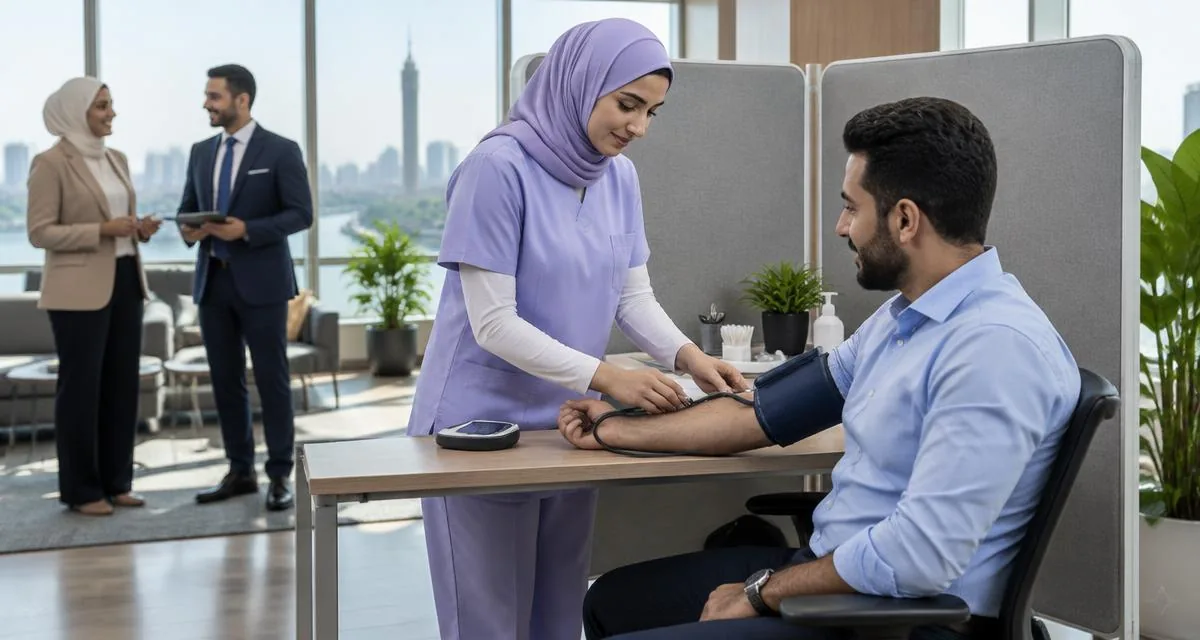
The opportunity this creates for integrated, home-based care is enormous. When a nurse coordinator visits a 70-year-old patient with hypertension, she is not just checking blood pressure. She is assessing functional independence, flagging signs of cognitive change, reinforcing nutrition and movement habits, and identifying the social isolation that is quietly multiplying the patient's clinical risk. This is the difference between a transaction and a model.
Five shifts that will define aging care in Egypt by 2030
Global health systems are beginning to reorient around five structural changes. Egypt cannot afford to wait — and the government is already signalling this direction: Egypt's National Digital Health Strategy 2025–2029, unveiled by the Ministry of Health in November 2025, aims to establish an integrated, human-centred digital health ecosystem with nationally unified health data systems by 2029.
1. From reactive treatment to proactive prevention
The EY research frames this as the most urgent systemic shift: moving from expensive, reactive acute care to proactive, prevention-oriented support — approaches that are both less expensive to deliver and what consumers most want. In Egypt, this means chronic disease management programs that intervene before the crisis, not after the hospitalization. It means nurse coordinators identifying rising HbA1c levels months before a diabetic emergency. It means medication adherence programs that prevent the avoidable readmission.
2. From institutional to home-centred care
No elderly Egyptian patient dreams of a nursing home. The aspiration is to age in one's own home, surrounded by family, with clinical support close at hand. Building this reality requires more than willingness — it requires verified nursing teams, digital monitoring capabilities, and home-visit infrastructure across governorates. The EY experts call for transforming care models to improve community-based support and navigation so people can remain at home longer and are not forced into traumatic acute care situations. Egypt has already demonstrated the demand, with over 13 million digital health appointments logged under its digital health platforms — a signal that patients will engage if the system reaches them.
3. From fragmented services to integrated navigation
One of the most cited failures in the EY global research is the experience of navigating a disjointed web of providers, labs, pharmacies, and specialists with no coordinating intelligence — consumers facing a confused web of services, struggling to access information and support when needed. In Egypt, where the patient is often responsible for physically carrying lab results between providers, this navigation burden is acute. A single care coordinator — human or AI-augmented — who manages the whole journey is not a luxury. It is the minimum viable model.
4. From caregiver invisibility to caregiver support
Family caregivers are Egypt's largest unpaid healthcare workforce. They receive no training, no financial support, no clinical supervision, and no recognition. A sustainable aging care model must invest in the caregiver as an active stakeholder — providing education on home clinical tasks, digital tools that reduce coordination time, and psychological support for the burnout that is both inevitable and currently invisible to the health system.
5. From volume to value: outcome-based healthcare
Egypt's health system still largely reimburses visits, procedures, and bed-days. The global shift is toward outcome-based models — where providers and patient support platforms are compensated for keeping patients healthy, not for treating them when they are not. The EY research frames this as the direction life sciences companies must embrace: demonstrating value through better health outcomes, paid for an outcome, not a product. Under Egypt's Universal Health Insurance rollout, this transition is already being enabled at the policy level — creating a window for tech-enabled patient support providers to position themselves as outcome-delivery partners, not just service vendors.
How Hospitalia is already building that future
Hospitalia was founded in 2019 with a single observation: the Egyptian healthcare system is excellent at treating disease, and far less equipped at managing health. Between the hospital discharge and the next clinic appointment — a gap that can stretch weeks or months — the patient is alone. The family is guessing. The chronic condition is silently progressing. Every capability Hospitalia has built is a direct response to that gap.
- Home healthcare with clinical integrity. Hospitalia deploys licensed nurses, physiotherapists, and clinical coordinators for home visits across Cairo and Giza. This is not a dispatch service — it is a structured care model, with pre-visit patient assessment, standardized clinical protocols, and post-visit documentation that feeds back to the treating physician.
- Nurse-led chronic disease management. For patients with diabetes, hypertension, heart failure, or COPD, Hospitalia's nurse coordinators provide the consistent, longitudinal touchpoints that prevent episodic crises: medication adherence monitoring, lab follow-up coordination, and vital sign tracking — delivered in the patient's home, in Arabic, at a cadence the clinical picture demands.
- Patient Support Program (PSP) infrastructure for pharma. Hospitalia operates as a tech-enabled PSP provider in Egypt, building branded patient support programs for pharmaceutical companies that cover enrollment, onboarding, structured engagement, and real-world outcomes reporting. The platform handles the operational architecture; the clinical team handles the patient.
- Corporate health programs. Through on-site and near-site deployment, Hospitalia brings occupational health, chronic disease screening, and periodic health assessments to Egypt's corporate workforce — the working-age adults whose unmanaged chronic conditions are creating the aging care crisis of the next decade.
- Telemedicine and digital continuity. Teleconsultation for chronic disease patients between home visits keeps the physician relationship intact without the physical and financial burden of clinic visits. Lab results, medication changes, and clinical notes flow through a single digital interface.
The five shifts described above are not Hospitalia's roadmap. They are already Hospitalia's operating model. What global research describes as the future of aging care — technology-enabled, home-centred, caregiver-aware, prevention-focused, and outcome-measured — is the infrastructure Hospitalia is building, one patient at a time, across Egypt today.
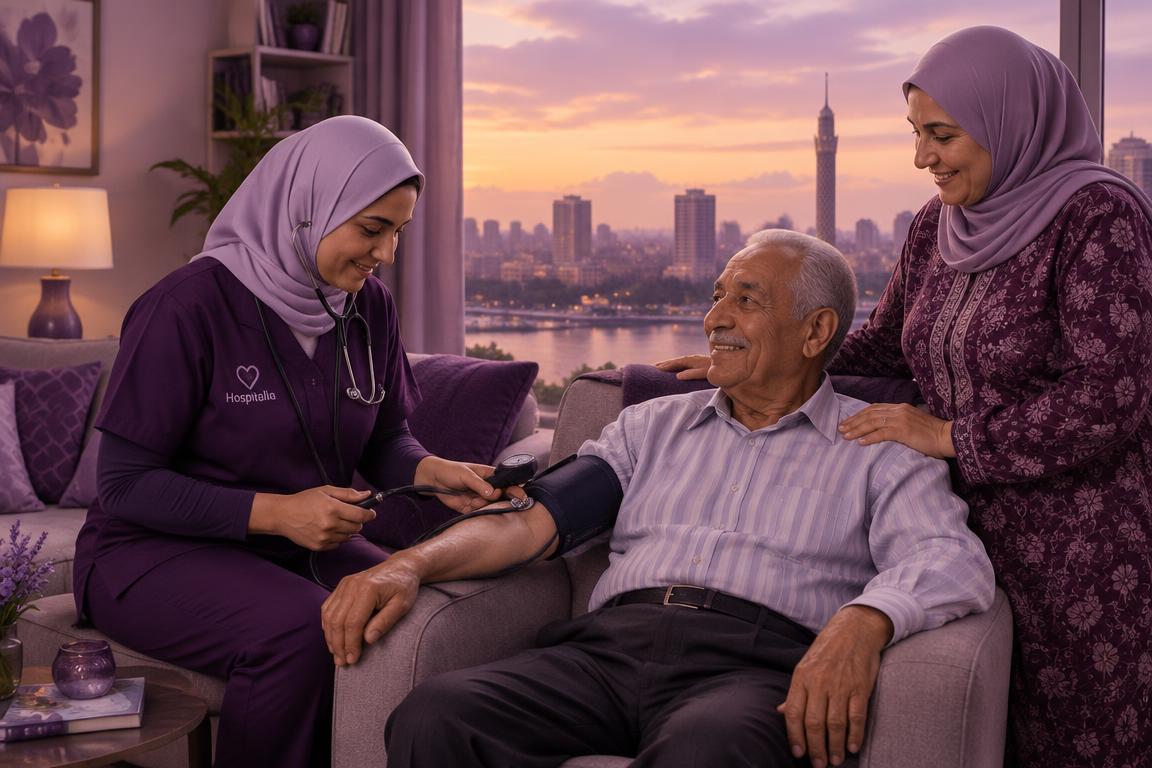
Hospitalia's home healthcare teams support elderly patients and their families with nursing, chronic disease follow-up, physiotherapy, and care coordination across Cairo and Giza.
Explore home healthcareThe time to act is before the crisis
Egypt's aging care challenge will not arrive gradually. It is already here — in every overcrowded emergency department, in every family managing a parent's diabetes without clinical guidance, in every patient who discontinued a treatment because no one followed up.
The question global healthcare systems are wrestling with — how will you deliver the care that consumers want as they age? — has a clear answer in Egypt. Consumers want to age at home, with dignity, supported by technology they can trust and professionals they can reach. They want caregivers who are supported, not exhausted. They want a system that sees them as a whole person across decades, not a case to be resolved in a single appointment.
Hospitalia exists to make that system real.
For pharmaceutical companies, insurers, and employers designing aging-care or chronic disease programs in Egypt, Hospitalia operates as the delivery partner — enrollment, home-based care, and outcomes reporting.
Talk to our teamFrequently asked questions
What home healthcare services does Hospitalia provide for elderly patients?
Hospitalia provides integrated home care for elderly patients, including home nursing visits, chronic disease follow-up (such as diabetes and hypertension), medication management, physiotherapy, home lab coordination, and teleconsultations — all through a licensed clinical team with central care coordination.
How does Hospitalia support family caregivers?
Hospitalia assigns a dedicated care coordinator who manages the patient's appointments, coordinates lab results with physicians, and follows up on medications — reducing the operational and emotional burden on family members so they can focus on the human side of care.
Does Hospitalia work with pharmaceutical companies on patient support programs?
Yes. Hospitalia operates as a tech-enabled patient support program (PSP) provider in Egypt, working with pharmaceutical companies to design and run programs that support treatment adherence and measure real-world patient outcomes.
How can I contact Hospitalia?
You can reach the Hospitalia team through hospitalia.net or call 01063151838 directly to ask about home healthcare services and chronic disease care programs.