Home Care After Surgery in Egypt: A Recovery Guide for Families
Quick answer
The days after discharge are when families carry the most responsibility. A practical guide to planning recovery at home in Egypt: what to ask before leaving hospital, wound care basics, warning signs, and when home nursing helps.
Home care after surgery means planning, before discharge, who will look after the patient, how the wound and medicines will be managed, which warning signs need a call to the surgeon, and which services (home nursing, physiotherapy, doctor visits, lab tests) will support recovery. In Egypt, families often carry this responsibility alone from the first night. A short written plan, agreed with the surgical team before leaving hospital, prevents most avoidable confusion. This guide is for families and caregivers; it complements, and never replaces, your surgeon's instructions.
- Before leaving hospital, make sure you understand how to care for the wound and know exactly who to contact with questions or problems.
- Ask for the discharge medicine list in writing and check that it matches the after-care instructions you were given.
- Redness and soreness around the surgical area, cloudy fluid draining from the wound, or fever can be signs of infection. Contact the healthcare provider right away.
- Clean your hands before and after caring for the wound. Family and friends should not touch the wound or dressings.
- A call from a clinician two to three days after discharge is a recognised good practice. If the hospital does not offer one, arrange your own check-in.
- In an emergency in Egypt, call 123.
Plan before discharge: the questions to ask
The Agency for Healthcare Research and Quality (AHRQ) in the United States has published a Re-Engineered Discharge toolkit that treats the days after discharge as a process to be planned, not an afterthought. Its follow-up call checklist covers five areas: how the patient is feeling, the medicines, appointments and tests, home services, and what to do if a problem arises. Families can use the same five areas as a checklist before leaving hospital.
| Area | Ask the surgical team | Write it down |
|---|---|---|
| Health and activity | What activity is allowed in the first days? What should the patient avoid? | Daily limits and any restrictions on lifting, bathing or driving |
| Medicines | Which medicines are new, changed or stopped? When is each dose due? | A single written list that matches the discharge summary and care instructions |
| Wound and dressing | How should the wound be cleaned and kept dry? Who changes the dressing and when? | Dressing schedule and the person responsible |
| Appointments and tests | When is the follow-up visit? Are any lab tests or imaging due? | Dates, location, and who will arrange transport |
| Home services | Does the patient need nursing, physiotherapy, equipment or a doctor visit? | Service, start date and a phone number for each |
| If something goes wrong | Whom do we call, day or night, and when do we go to the emergency department? | Surgeon or hospital contact number and 123 for emergencies |
AHRQ also recommends the teach-back method: the patient or caregiver explains the instructions back in their own words, and the clinician repeats the teaching until they are described correctly. Ask the nurse to do this with you before you leave, especially for dressing changes and medicines.
Wound care basics at home
Always follow the specific wound instructions given by your surgical team, because they depend on the operation and the patient. The CDC's guidance on surgical site infection adds general principles that apply widely: understand how to care for the wound before leaving hospital; clean your hands before and after caring for it; ask visitors to clean their hands with soap and water or an alcohol-based rub before and after visiting; and keep family and friends from touching the surgical wound or dressings.
- Prepare a clean area and clean hands before any dressing change.
- Do not use creams, powders or home remedies on the wound unless the surgical team approves them.
- Check the wound at the same time each day and note how it looks, so changes are easy to spot.
- Keep a simple daily log: temperature, pain level, medicines taken, food and fluids, and wound appearance.
- If the instructions are unclear, call the surgical team before changing anything.
Warning signs: when to call
According to the CDC, signs of a surgical site infection include redness and soreness around the surgical area, cloudy fluid draining from the wound, and fever, and a patient at home should call their healthcare provider right away if any of these appear. Your surgeon may list additional warning signs specific to the operation, such as severe pain that is not controlled by the prescribed medicines, bleeding, or breathing difficulty. Write those down at discharge.
When home nursing, physiotherapy and doctor visits help
Not every patient needs professional help at home, and the right level depends on the operation, age, other illnesses and who can care for the patient. These are common situations in which families look for support.
- Dressing changes and wound checks, when no family member is comfortable or trained to do them. A nurse can also demonstrate clean technique to the caregiver.
- Medicine support, such as injections prescribed after discharge, where a trained nurse can administer them and record doses.
- Mobility and rehabilitation, where physiotherapy at home can guide safe movement as the surgical team allows.
- Older patients or those with several chronic conditions, who may need regular nursing observation and a doctor visit if their condition changes.
- Follow-up tests, where lab sampling at home can save a difficult trip. The surgical team decides which tests are needed.
- Short-term overnight or live-in nursing after major surgery. Discuss the need and duration with your doctor.
AHRQ's guidance also reminds clinicians to confirm that home services and equipment arrived as planned. Families can do the same: on the first day, check that the nurse, the dressings, the medicines and any equipment are in place.
Choosing a home care provider
- Ask for the nurse's registration and relevant experience, and whether the same nurse or a small team will attend.
- Ask how visits are documented and who the family contacts if the patient's condition changes.
- Make sure the provider works with the surgical team's instructions and refers back to the surgeon or hospital for medical decisions.
- Agree the visit schedule, the scope and the pricing in writing before the first visit. We do not quote prices in this guide, because costs depend on the service, duration and location.
How Hospitalia can help
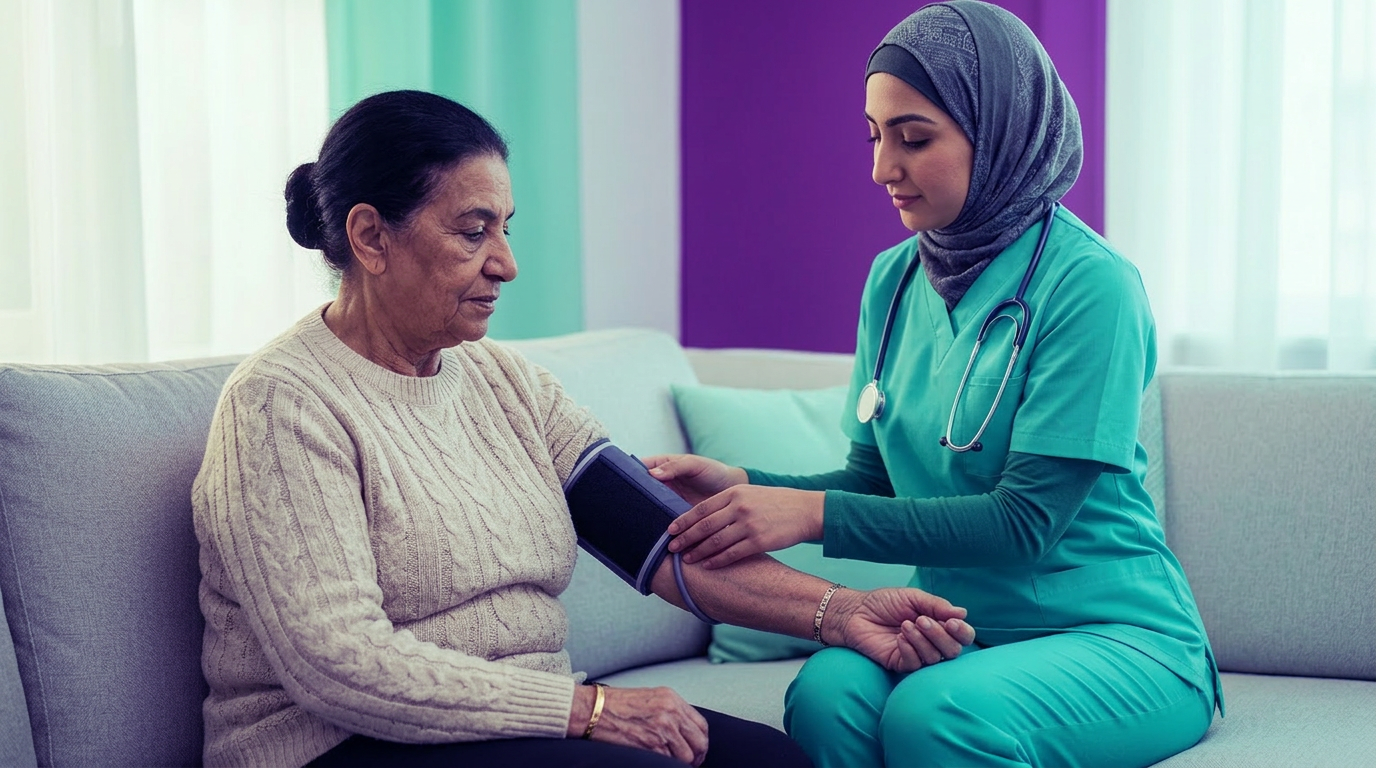
Hospitalia is an Egypt-based integrated home healthcare platform. Families can book doctor home visits, home nursing, physiotherapy at home and home lab testing through the app, the website or by phone. For post-operative recovery, our team can help you plan which services you need and how to coordinate them with your surgeon's instructions. We do not replace the surgical team; medical decisions about the operation stay with your surgeon.
Call 01063151838 or book online. Tell us the operation, the date of discharge and the services you are considering.
Book home careFrequently asked questions
What should I ask before the patient leaves hospital after surgery?
Ask how to care for the wound, which medicines are new or changed, when the follow-up visit is, whether home services or equipment are needed, and whom to call if a problem arises. Write the answers down and ask the nurse to check your understanding using teach-back.
What are the signs of wound infection after surgery?
The CDC lists redness and soreness around the surgical area, cloudy fluid draining from the wound, and fever. Call the healthcare provider right away if you notice them, and follow any extra warning signs your surgeon gave you.
Can family members change the dressing?
Only if the surgical team has shown them how and said it is appropriate. Clean hands before and after are essential, and visitors and other family members should not touch the wound or dressings.
When do I call 123?
Call 123 or go to the nearest emergency department for severe breathing difficulty, chest pain, heavy bleeding, fainting or loss of consciousness. For less urgent concerns, call the surgical team first.
Do I need a home nurse after surgery?
It depends on the operation, the patient's age and health, and whether family members can safely manage dressings, medicines and mobility. Discuss it with the surgeon at discharge. A nurse is common for dressing changes, injections and monitoring older or high-risk patients.
Can physiotherapy start at home after surgery?
Often yes, but the timing and type of exercises must follow the surgeon's instructions. A physiotherapist at home can guide safe movement within the limits the surgical team sets.