Launching a Patient Support Program Pilot in Egypt: A Practical Guide
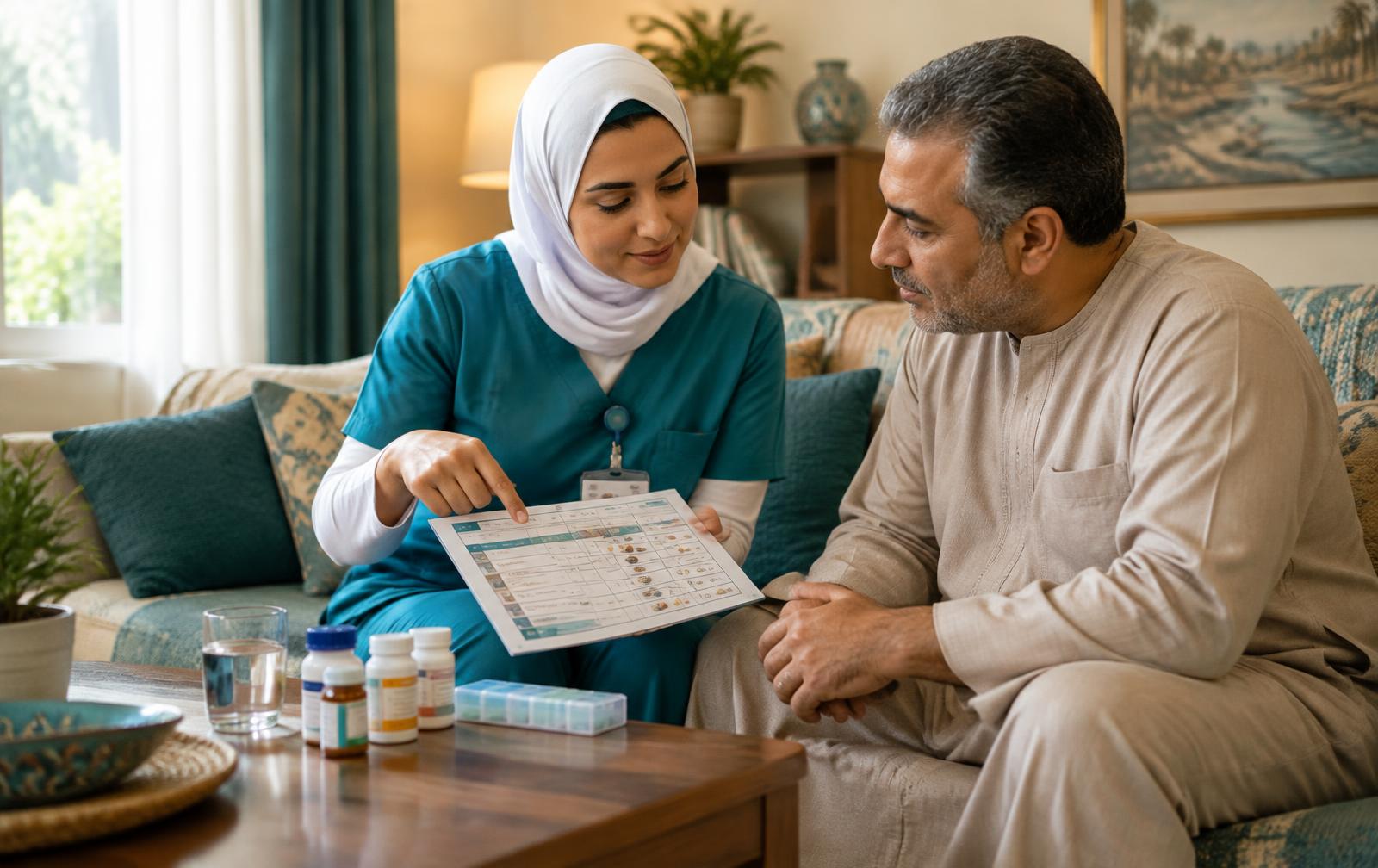
Quick answer
A practical guide for pharma teams in Egypt: how to scope a patient support program pilot, settle safety reporting and consent before the first patient, and decide whether to scale, adjust or stop.
To launch a patient support program pilot in Egypt, choose one therapy, a limited patient group and a fixed review period. Settle consent, safety reporting and escalation before the first patient enrols, and agree success criteria in writing. A pilot should show whether the service can run safely, so scaling becomes a decision rather than an assumption.
Imagine a pharmaceutical company preparing to support a self-injected biologic in Cairo and Giza. The commercial team wants broad enrolment by the end of the quarter. The medical, regulatory and pharmacovigilance leads want to know who answers when a patient reports a side effect at nine in the evening. The sensible first step is neither to promise wide coverage nor to wait indefinitely: it is a short pilot for a small patient group in two governorates, with written answers to those questions before anyone is enrolled. (This is an illustrative hypothetical, not a client case.)
Why run a pilot before a wider launch?
A patient support program touches clinical, regulatory, operational and communication processes at the same time. On paper each looks manageable. In practice the weak points appear at the joins: a referral that arrives without consent, a nurse who hears about a side effect but does not know the escalation route, a reminder message that has not been approved, or a report that reaches the sponsor too late.
A pilot lets you find those weak points while the patient numbers are small and every case can be reviewed by hand. It also gives the medical, commercial and safety functions a shared set of observed facts to discuss, instead of competing assumptions. And it protects patients: a service that is tested on a limited group under close review is safer than one that is scaled before its escalation routes have been exercised.
Define the pilot question and its limits
The most useful pilot is built around one question, such as whether the enrolment-to-first-visit pathway works for a single therapy in defined locations. Vague aims such as testing the program produce vague results. Before anything else, write down the following.
- Therapy and patient group: one product, one indication, and a clear definition of who is eligible, so that every referral can be judged against the same rule.
- Locations: a small number of governorates or sites where you can actually deliver, rather than every place you hope to reach later.
- Services in scope: for example enrolment, education, adherence follow-up, or home administration. Include only what you can staff and supervise now.
- Duration and review points: a fixed period with scheduled reviews, so the pilot ends with a decision rather than drifting on.
- Patient numbers: a range small enough for manual review of every case, but large enough to meet each type of situation at least once.
- What the pilot will not prove: be explicit that a small, short pilot cannot establish clinical outcomes or long-term adherence, so nobody draws conclusions it cannot support.
Agree the success criteria at this stage and sign them off with all functions. Examples are process measures such as whether consent was captured before service started, whether every enquiry was routed to the right owner, and whether every safety report reached the right person on time. Our guide to patient support program KPIs in Egypt explains how to choose measures that can be defended.
Name a single pilot owner who brings the functions together and keeps the decision log. When several teams are involved without a clear owner, answers are delayed and each team assumes another is handling the issue. The owner can be a coordinator who knows the routes and has the authority to call an urgent meeting if a patient-related problem appears.
Settle regulatory and safety duties before the first patient
The Egyptian Drug Authority's Good Pharmacovigilance Practice guideline (Version 3, issued 1 July 2026) is the reference for how safety information from a patient support program must be handled. Your pharmacovigilance and regulatory leads, including the QPPV, should confirm the application to your product. The points below show why this has to be settled before go-live, not after.
- Support programs are a data source. The guideline names support programs among the sources of safety data, and the marketing authorization holder must be able to list such sources for inspection and audit.
- Reports are solicited. Reports from patient support and disease management programs are not considered spontaneous, and where a reaction is suspected to be related to the product, the report is considered solicited.
- Reports go to EDA. All individual case safety reports that originate from organized data collection systems must be submitted to EDA.
- Timelines are short. Serious valid reports are due within 15 calendar days and non-serious valid reports within 90 calendar days.
- The clock starts with awareness by anyone. Day zero is when the minimum reporting information reaches any personnel of the marketing authorization holder, including medical representatives and contractors. A nurse or coordinator at a service partner can start that clock.
- Delegation must be documented. Delegated activities are described in the pharmacovigilance system master file, subcontract lists are annexed to it, and personnel must receive initial and continued training with records kept.
The practical lesson is that a support program partner's staff need a simple, rehearsed route for passing safety information to the sponsor's pharmacovigilance team immediately, and the contract and training records need to match that route. Our guide to adverse event reporting in patient support programs in Egypt explains the workflow in more detail.
Consent, privacy and communication boundaries
Patient data should be collected under documented consent that explains what is collected, who sees it and why. Decide before launch how consent is captured, how it is stored, and what happens when a patient declines or withdraws. Our guide to consent and privacy in patient support programs in Egypt covers this in depth.
Patient communication also needs boundaries. Messages and call scripts should be approved, non-promotional and limited to the support role: they should not give individual medical advice that belongs to the treating doctor, and they should route medical questions to a clinician. Run each script through your medical and regulatory review before the first call is made.
Document what happens during the pilot, but only as much as needed: who enrolled the patient, when consent was captured, who received each enquiry and how it was handled. Clear records make review easier and show that procedures were followed, without collecting more data than the program needs. Decide in advance who may see these records and how long they are kept.
A go-live readiness check
| Area | Question to answer | Evidence of readiness |
|---|---|---|
| Eligibility | Who can be enrolled and who decides? | Written criteria and a named decision owner |
| Consent | Is consent captured before any service starts? | Approved consent form and storage procedure |
| Safety | Who receives a safety report, and how fast? | Rehearsed route, PSMF entry and training records |
| Medical questions | Where does a clinical question go? | Escalation contact and a defined response owner |
| Content | Are scripts and materials approved? | Approved versions and a version log |
| People | Are staff trained for the role? | Role-specific training and supervised first cases |
| Reporting | What will the sponsor see, and when? | Agreed report template and review dates |
Go live only when each row has evidence, not just an assurance. A short dry run with test cases, such as an enrolment without consent or a side effect reported by phone, will reveal gaps more quickly than a document review. Our guide on how to choose a patient support program partner in Egypt lists questions to ask any partner about these areas.
Running the pilot week by week
- Hold a kick-off with every function so everyone knows the scope, the escalation routes and the review dates.
- Enrol the first few patients under close supervision and review each case end to end.
- Hold a short weekly review of process points: delays, unclear referrals, missing consent, unrouted questions.
- Log every deviation and how it was fixed, so that corrections become part of the procedure.
- Hold the formal mid-point and end-of-pilot reviews against the success criteria agreed beforehand.
Keep the review team small and cross-functional: medical, regulatory, pharmacovigilance, operations and commercial. The aim is not to defend the program but to find what must change before it grows.
Do not overlook treating doctors. The patient ultimately follows treatment with their own doctor, and the support service complements that role rather than replacing it. Tell doctors what the service does and does not provide, and how any clinical observation reaches them. If you find that doctors do not understand the program's role, that is a gap in the pilot to record and fix before scaling.
Decide: scale, adjust or stop
At the end, decide using the criteria you wrote down, not the mood in the room. Three outcomes are legitimate. Scale if the process measures were met, safety routes worked as rehearsed and no unresolved issue remains. Adjust if the pilot exposed fixable gaps, then repeat a short, focused second phase. Stop if a gap cannot be closed safely or the service does not fit the product or the patients.
Whatever the outcome, record the lessons, update procedures and contracts, and brief everyone involved. A well-run pilot that ends in adjust or stop has still done its job: it prevented a larger problem.
If you decide to scale, do it in measured steps rather than all at once: add one location or patient group, review the results, then take the next step. Each expansion changes the workload on the team and the escalation routes, and deserves a short readiness check before it starts, so that new problems are not discovered after patient numbers have grown.
Common mistakes to avoid
- Treating the pilot as a soft launch with no end date and no decision.
- Starting enrolment before safety reporting and consent are settled.
- Choosing success measures after the results are in.
- Scoping several therapies and many locations at once, so no case can be reviewed closely.
- Using unapproved scripts or messages because the pilot is small.
- Forgetting that contractor staff can start the safety reporting clock.
How Hospitalia can support a pilot
Hospitalia's patient support services cover enrolment with consent capture and eligibility checks, home injection and infusion by licensed nurses, adherence follow-up, patient and caregiver education, and safety information capture aligned with the partner's procedures and regulatory timelines. Reporting is provided to partners, and patient data is collected under documented consent, with partners receiving aggregated reporting unless the consent scope allows otherwise. Hospitalia is not an insurer or a claims administrator. Therapy areas, locations, timing and fees are confirmed in a scoping session, not assumed. To discuss a pilot for your product, call 01063151838.
This article is general information for pharmaceutical and healthcare teams. It is not legal, regulatory or medical advice. Regulatory duties depend on the product and the marketing authorization holder's own situation, so confirm them with your regulatory affairs and pharmacovigilance leads and with the Egyptian Drug Authority.
Therapy areas, locations, timing and fees are confirmed after a scoping session. Call 01063151838.
Talk to the patient support teamFrequently asked questions
How long should a patient support program pilot run?
There is no single right length. Choose a fixed period long enough to meet each type of situation at least once and to hold scheduled reviews, and write the end date and decision point down before enrolment starts.
How many patients does a pilot need?
Enough to exercise every step of the pathway, but few enough that every case can be reviewed by hand. The number depends on the therapy and the services in scope, so agree it with your medical and operations teams.
Do safety reports from a pilot go to EDA?
Under the EDA GVP guideline (Version 3), reports from patient support programs are not considered spontaneous, a suspected product-related reaction is treated as solicited, and all case reports from organized data collection systems are submitted to EDA. Confirm the details for your product with your pharmacovigilance lead.
Can a service partner's nurse start the reporting clock?
Yes. The guideline says day zero starts when the minimum reporting information reaches any personnel of the marketing authorization holder, including medical representatives and contractors, so partner staff need a rehearsed route to the sponsor.
What should a pilot prove?
It should show whether the process works: consent is captured, questions reach the right owner, and safety information is passed on correctly and on time. A small, short pilot cannot establish clinical outcomes or long-term adherence.
What happens if the pilot shows problems?
That is a useful result. Fix the gaps and run a short second phase, or stop if a gap cannot be closed safely. Scale only when the criteria you agreed beforehand are met.
