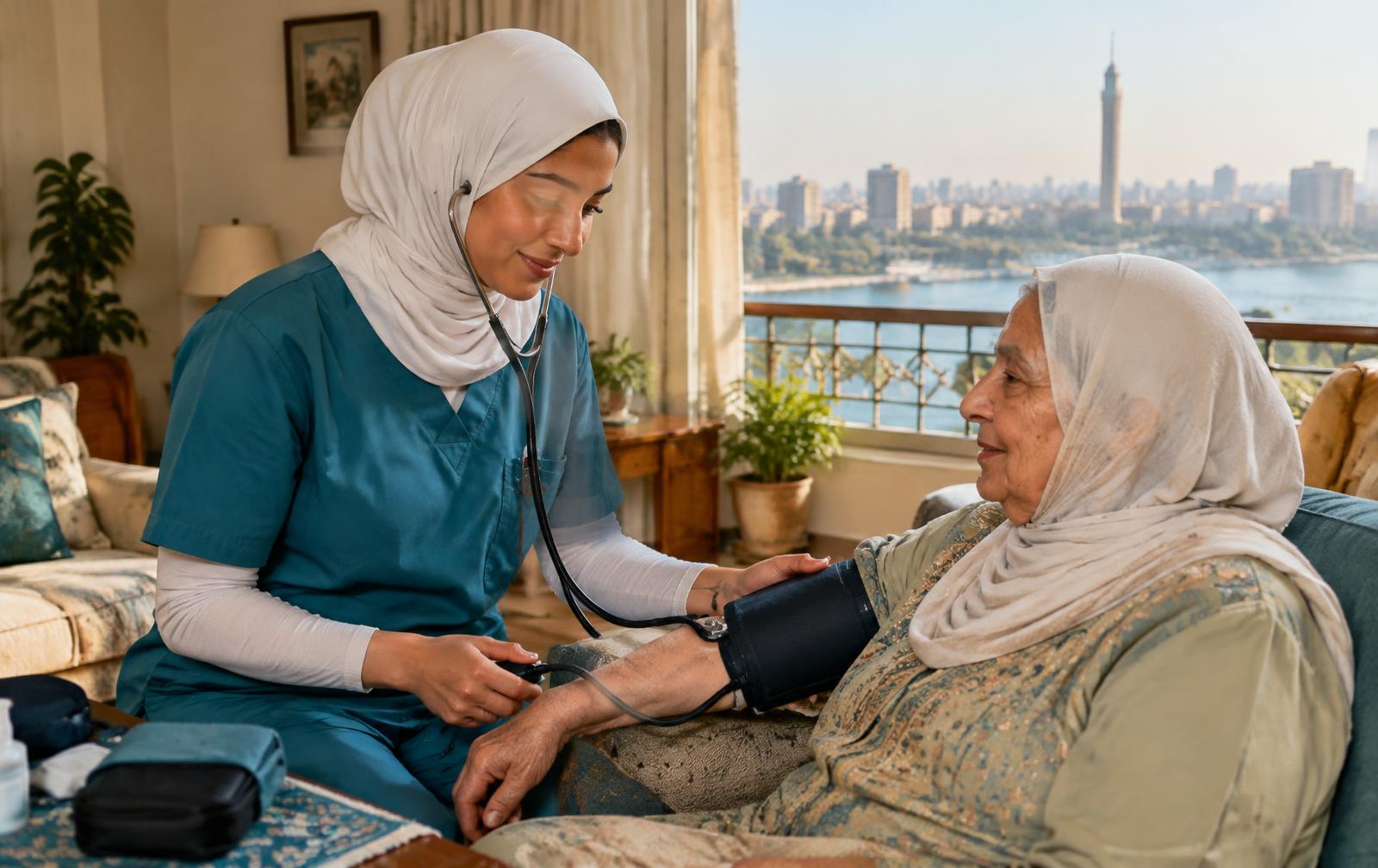
Palliative Care at Home in Egypt: A Family Guide to What It Is, Who Is Involved and How to Start
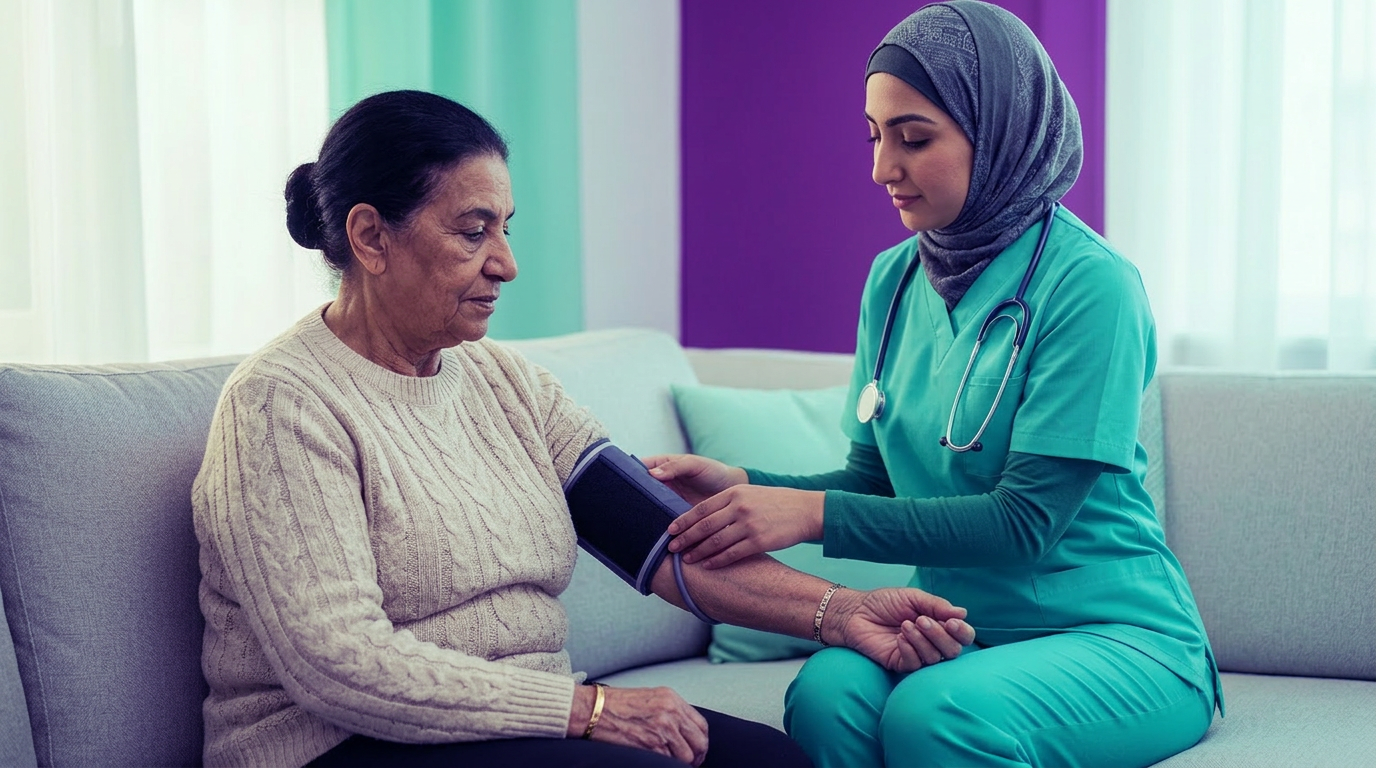
Quick answer
A careful, sourced guide for Egyptian families caring for a seriously ill relative: what palliative care is, why it is not only for the last days, what the evidence says about Egypt, how to prepare a home plan, and what a visiting nurse can and cannot do.
Short answer: palliative care is specialised support that aims to improve the quality of life of people with a serious illness and of their families. WHO says it is most effective when considered early, and that it is not only for cancer or the last weeks of life. Palliative care at home is possible when the treating team judges it safe and a plan is in place, but services in Egypt are limited, so families should ask early.
- WHO (fact sheet dated 5 August 2020) says palliative care improves the quality of life of patients and families facing life-threatening illness, and that the quality of life of caregivers improves as well.
- WHO estimates that 56.8 million people need palliative care each year, including 25.7 million in the last year of life, and that only about 14% of those who need it receive it.
- WHO says palliative care is most effective when considered early in the illness, that early delivery reduces unnecessary hospital admissions, and that it is a misconception that it is only for cancer or the last weeks of life.
- A WHO guide for primary health care (16 October 2018) states that the great majority of people who need palliative care prefer to remain at home, and that providers with basic training can meet most needs and arrange transfer to a higher level of care when necessary.
- In Egypt, a 2024 study of 108 nurses and physicians at one cancer centre in Qena found that more than 60% were not familiar with palliative care and more than 77% had received no training; all reported no specific policy for end-of-life care. It covers one facility, so it is not a national figure.
- We found no verified Egyptian information on fees or insurance cover for palliative care at home and do not state any. Ask every provider and your insurer in writing.
What palliative care is, and what it is not
WHO describes palliative care as an approach that improves the quality of life of patients, adults and children, and of their families when they face problems linked to life-threatening illness. It prevents and relieves suffering through early identification, correct assessment and treatment of pain and other problems, whether physical, psychosocial or spiritual. It uses a team approach that also addresses practical needs and offers bereavement counselling. WHO lists physicians, nurses, support workers, paramedics, pharmacists, physiotherapists and volunteers among the people who can take part.
Two misunderstandings are worth correcting early. First, palliative care is not only for cancer: among adults who need it, WHO reports that cardiovascular disease accounts for 38.5%, cancer 34%, chronic respiratory disease 10.3%, AIDS 5.7% and diabetes 4.6%, and that many other conditions, including kidney failure, chronic liver disease, Parkinson's disease and dementia, may require it. Second, it is not only for the last weeks of life: WHO lists that belief among the misconceptions that limit access, and says palliative care is most effective when considered early. Pain and difficulty breathing are among the most frequent and serious symptoms. How they are treated is a clinical decision for the treating team, and this guide gives no medical instructions.
Why families ask about palliative care at home
The WHO guide on integrating palliative care into primary health care says the great majority of people who need palliative care prefer to remain at home, which is why it argues that care should be provided in the community. That is a statement about preference for care at home, not a promise that every need can be met there. The same guide notes that primary health care providers with basic training can respond to most needs and arrange transfer to a higher level of care when necessary, with attention to continuity of care, respect for the patient's values and the family.
What the situation looks like in Egypt
The honest picture is that palliative care is still developing in Egypt. A 2024 paper in BMC Palliative Care by Osman, Horvick and Dias reports that, according to its background section, only four centres in Egypt provide palliative care for adult cancer patients and one for children with cancer. In the study itself, all 108 nurses and physicians at a cancer centre in Qena Governorate were interviewed. More than 60% were not familiar with the concept, more than 77% had received no training on it, and all said there was no specific policy for end-of-life care. More than 60% believed their patients did not need it because they thought it was only for end-stage patients, while about half saw benefits such as pain relief and symptom management. The authors note that the study covers a single facility, so its findings may not apply across Egypt.
For a family, the practical lesson is that you may need to raise the subject yourselves. WHO also lists lack of awareness, cultural and social barriers such as beliefs about death and dying, and limited training among the barriers to access worldwide. Asking the treating doctor directly, and early, is reasonable, and it does not mean giving up on treatment.
What can realistically be arranged at home
Home care for a seriously ill person works best when everyone knows who is responsible for what. The table below is a practical structure, not a service promise.
| Need | Who leads | How home visits may help |
|---|---|---|
| Diagnosis, treatment decisions and the symptom plan | The treating doctor or palliative care team | A visiting nurse follows the written plan and reports concerns to the team |
| Nursing tasks the doctor has ordered | A nurse, within a valid order and suitable home conditions | Agreed observations, dressings, injections or other procedures where the order and conditions allow |
| Teaching the family | A nurse or physiotherapist | Safe positioning, hygiene and everyday routines, and when to call the team |
| Movement and comfort | A physiotherapist, if the doctor advises | Assessment and guidance suited to the person's condition |
| Emotional and spiritual support | The family, and counsellors or clergy as the family wishes | Time and space for conversations; the team can say what support exists |
| Supplies and equipment | The family with the treating team | Advice on what is needed and what the home can accommodate |
Prepare for palliative care at home in six steps
- Ask the treating doctor whether palliative care involvement is appropriate now, who would coordinate it, and where it could be provided.
- Ask for a written plan: the goals of care, the medicines prescribed, what the family should watch for, and who to call by day and by night. Do not change or stop any medicine without the treating doctor.
- Decide who the main carer is and who the backup is. Caregiving is exhausting, and WHO notes that palliative care aims to improve the quality of life of caregivers too.
- Prepare the home: a safe place to rest, access for visitors and equipment, and a clear list of contacts. Our guides on home nursing and on discharge from hospital cover practical points.
- Talk with the person, if they wish, about their preferences, including where they want to be cared for and when they would want to go to hospital. Be sensitive to the family's beliefs and customs.
- Plan for emergencies. Write down what would make you call the treating team and what would make you call emergency services, and keep the person's reports and prescriptions together.
Talking about it as a family
Conversations about serious illness are hard in any family, and WHO lists cultural and social barriers, such as beliefs about death and dying, among the obstacles to palliative care. There is no single right way to begin. Many families find it easier to start with practical questions rather than big ones: what would make the days easier, what worries the person most, and who they would like to be involved in decisions. Let the person set the pace and decide how much they wish to know. Some relatives will want every detail and others will not, and both reactions are normal. If the person cannot take part because of their condition, agree among the family who speaks to the doctor, so that the team hears one clear message. If disagreements arise, ask the treating doctor for a family meeting rather than debating decisions at the bedside.
It also helps to separate two questions that families often merge: what care the person wants, and what the family can realistically provide. The first belongs to the person and the treating team. The second is a practical question about time, space, money and energy, and it is better answered honestly and early than discovered in a crisis. If the home cannot safely provide something, say so. The treating team can suggest another setting, and that is a plan adjusting, not a failure.
Looking after the main caregiver
Families often focus on the patient and forget that one relative carries most of the load. Agree a rota so that the main carer can sleep and eat properly, ask other relatives for specific tasks such as errands, collecting medicines or sitting with the patient, and tell the care team if the carer is struggling. The WHO fact sheet says palliative care includes support for caregivers, and that caregivers' quality of life improves as well. A home nurse can teach safe routines so that the family feels more confident, within the visit scope agreed.
Keep one care folder
A single folder, on paper or on a phone, saves time in a crisis and whenever a new nurse or doctor joins the care. Keep it where every carer can find it and update it after each visit. We suggest including:
- The written plan from the treating team, with the date it was last updated.
- The list of prescribed medicines exactly as written on the prescription, and the times they are given as recorded by whoever gives them. Do not add or change anything without the treating doctor.
- Recent reports, test results and the discharge summary from any hospital stay.
- A contact list: the treating doctor, the nurse or provider, the pharmacy and the family members to call, with who to call by day and who by night.
- A short note of the person's preferences, as they have expressed them, including where they wish to be cared for.
- Insurance documents and a record of what each provider has agreed in writing, including fees and visit schedules.
- A simple visit log: the date, who visited, what was done and any concern raised.
An illustrative scenario in Giza
This example is illustrative, not a real client case. A family in Giza is caring for their 74-year-old father, who has advanced heart disease and has been in hospital several times this year. His daughter asks his cardiologist whether palliative care support is appropriate. The doctor agrees to coordinate and writes down the plan: the medicines, the symptoms to watch for, who to call at night and when to go to the emergency department. The family arranges nursing visits for the care the doctor has ordered, and the nurse teaches the daughter and her brother how to help him move safely and when to phone the team. The daughter is the main carer and her brother is the backup, with a rota agreed so that she can rest. The decisions about his treatment stay with him and his doctor. The point: the plan, the contacts and the shared roles did more to calm the household than any single visit.
Questions to ask a home nursing provider
- Who is the responsible doctor, and who do we call at night or at weekends?
- What will the nurse do on visits, and what is outside scope?
- How do you work with the treating team and keep the written plan up to date?
- What are your fees, visit frequency and cancellation terms, in writing?
- How do you protect the family's privacy and the patient's records?
How Hospitalia can help
Hospitalia is an Egypt-based integrated home healthcare platform. Its home nursing service covers a nursing assessment, prescribed procedures where a valid order and suitable home conditions exist, agreed care observations and caregiver education. Home nursing is not continuous monitoring or an emergency service by default, and suitability, coverage areas, visit schedules and fees are confirmed at assessment and booking. This guide does not claim that Hospitalia is a specialist palliative care or hospice provider. Where the treating team has set a plan, home nursing visits can support its nursing and family-education elements, subject to assessment.
Call 01063151838 or request a home nursing assessment, and we will confirm what can be arranged around the treating team's plan.
Request a home care assessmentFrequently asked questions
What is palliative care at home?
It is palliative care delivered in the person's home, with a plan set by the treating team. WHO describes palliative care as an approach that improves quality of life for patients and families facing serious illness by preventing and relieving suffering. Whether care at home is suitable depends on the person's needs and the home conditions.
Is palliative care only for the last days of life?
No. WHO lists that belief among the misconceptions that limit access and says palliative care is most effective when considered early in the course of the illness.
Can palliative care be given at home in Egypt?
Services are limited. A 2024 paper reports that only four centres in Egypt provide palliative care for adult cancer patients, and a single-centre study found low awareness and training among providers. Ask the treating doctor early and ask any home nursing provider exactly what it can and cannot do.
Who is in a palliative care team?
WHO names physicians, nurses, support workers, paramedics, pharmacists, physiotherapists and volunteers among the people who can take part, working with the patient and the family.
Does palliative care mean stopping treatment?
WHO describes palliative care as support that is most effective when considered early in the illness, so it is not defined by stopping treatment. Decisions about treatment stay with the patient and the treating team.
How much does palliative care at home cost in Egypt, and is it covered by insurance?
We found no verified Egyptian information on fees or insurance cover and do not state any. Ask each provider for fees, visit frequency and terms in writing, and ask your insurer what is covered.