Preparing Records for a Home Doctor Visit in Egypt
Quick answer
Prepare a useful working set of records without rewriting the medical history. Keep the patient's priorities, source documents and unresolved questions easy to find.
For a home doctor visit, prepare a small, organized set of information rather than trying to assemble a perfect medical archive. Start with the reason for the visit, the medicines actually being used, relevant reports and the questions the patient wants answered. Keep the original documents available so the doctor can review their context. Organizing information is a family task; interpreting results and deciding treatment remain the doctor's responsibility.
This guide focuses on preparing records for a planned visit in Egypt. It does not assess whether home care is suitable for a particular condition or tell you how to treat symptoms. Confirm the visit arrangements and any preparation instructions with the responsible team. If you believe urgent care is needed, seek appropriate urgent medical help rather than waiting to finish paperwork or for a routine booking to take place.
Begin with the patient's reason for requesting the visit
Ask the patient what they most want the doctor to understand. Write that concern in their own words, with the timing and changes they can describe. A family member can help organize the notes, but should distinguish what the patient says from what someone else observed. Avoid turning the note into a diagnosis. If the timing is uncertain or information is missing, record the uncertainty instead of supplying a confident answer from memory.
Put the most important questions near the top. A long list of historical documents can obscure the current reason for the visit if there is no short explanation of why the appointment was requested. The note can identify concerns and questions without deciding which diagnosis is most likely. Leave space to record the doctor's explanation and the agreed next steps, including any question that cannot be answered during that visit.
Build an accurate medicine list without changing treatment
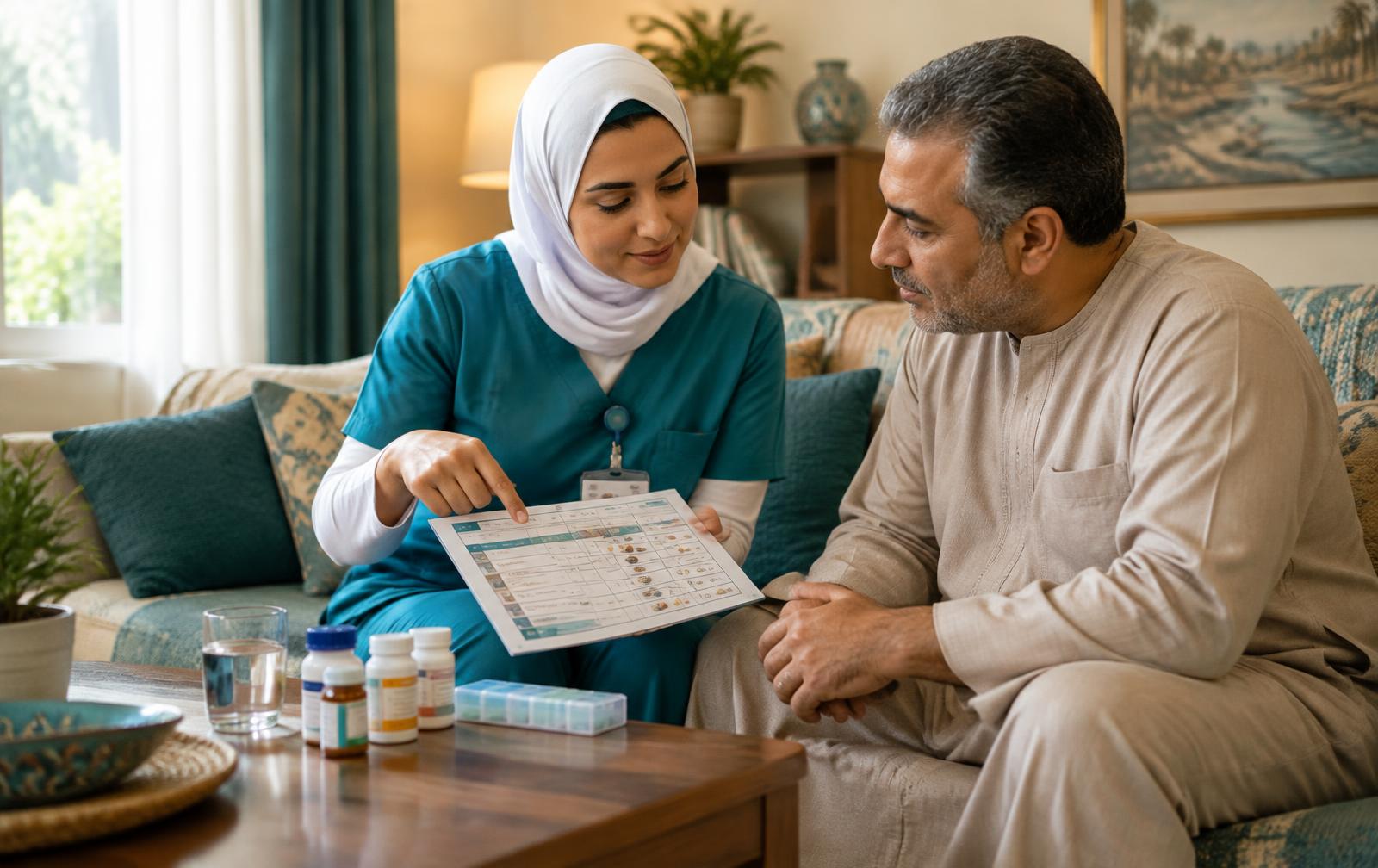
Gather the medicines and the information already available about how they are being taken. Include prescribed items, products bought without a prescription, supplements and any uncertainty that the patient or caregiver wants to discuss. Keep the packaging or existing prescription available where possible. If different lists disagree, bring both and tell the doctor that they differ. Do not resolve the disagreement by guessing which instruction is current.
The NHS appointment-preparation guide recommends noting questions and medicines and checking that the next steps are understood. This is general communication guidance from the United Kingdom, not a statement about Egyptian booking arrangements or entitlement. For a home visit, an organized list can support the discussion, but it does not replace the doctor's review. Do not stop, restart or adjust a medicine simply to make the list appear consistent.
Select relevant reports and keep their context
Separate recent documents related to the reason for the visit from older material kept for background. Preserve the patient's name, document date, issuing facility and full report. A cropped result image may remove information the clinician needs to understand it. Keep complete pages together, including attachments that belong to the same report. Where the original is unavailable, explain whether you have a copy, a photograph or only a family note about the result.
Arrange documents in a clear order and label them using the information already on the page. Do not rename a test with a diagnosis the doctor has not made. If records come from several clinics or laboratories, keep the source visible. The purpose is to make the information easy to locate without changing its meaning. Ask the visiting team beforehand whether particular reports are useful for the booked consultation and how they should be made available.
Keep a short index for a larger file
When there are many documents, a brief index can help the family locate them during the visit. List the document date, type and source, then note where it is stored. Keep the index descriptive. It should not summarize a clinician's conclusion in different language or label an old treatment plan as current. If two documents appear to conflict, identify them for review rather than removing the one that seems less convenient.
- Keep recent relevant reports together and preserve complete pages.
- Keep discharge instructions and follow-up letters identifiable by date and source.
- Put the current medicine information and unresolved discrepancies in an accessible place.
- Record the patient's questions separately from the medical documents.
- Mark missing documents as missing instead of reconstructing their contents.
- Keep original files available if you prepare a shorter working set for the visit.
Agree who will help and what information can be shared
Ask the patient how they want relatives or caregivers involved. A person who organizes the folder does not automatically become the person entitled to receive every clinical detail. Discuss practical support with the responsible care team, particularly when communication or decision-making support is needed. Do not assume that a family group chat is an appropriate destination for reports. Use the communication and consent arrangements agreed for the visit.
Choose one person to help locate documents if the patient wants that support, while allowing the patient to speak directly where possible. Keep disagreements about remembered details visible and respectful. The doctor can ask follow-up questions; the family does not need to present a single polished story. Notes are most useful when they preserve what is known, who supplied it and what still needs clarification.
Prepare digital files so they can actually be reviewed
Check that files open, photographs are readable and the relevant pages are available on the device that will be used during the appointment. Use descriptive filenames based on the document type and date. Keep a copy in the original format when making a working version. Do not edit a result, remove a warning or alter a date to make the file easier to present. Organization should improve access without changing the record.
Before sending documents, confirm the recipient and the channel with the care provider. Share only what is requested and appropriate for the stated purpose. A public enquiry form is for discussing service arrangements, not automatically a channel for uploading a complete medical history. If you cannot access a file, tell the team rather than sending an unrelated screenshot. Ask whether a printed copy or another agreed method would be more practical.
Confirm the visit's practical arrangements separately
Record the confirmed date, contact route, location and any access information needed by the visiting team. Ask what the consultation includes and whether tests, procedures, written reports or follow-up require separate arrangements. Do not assume a doctor will bring every possible device or perform a procedure simply because the visit takes place at home. Availability, clinical scope, fees and timing should be confirmed for the actual request.
Hospitalia's home-doctor service provides a relevant starting point for discussing a visit. Use the service enquiry to explain the request and ask which records the team would like to review. Confirm suitability and the proposed scope before treating a booking discussion as a finalized appointment. Keep commercial questions about the visit alongside, but separate from, the patient's clinical questions so neither gets lost during the conversation.
Use the visit to clarify the next record, not just review old ones
Ask how the consultation summary and any new instructions will be provided. Confirm who is responsible for arranging a recommended next step and how questions should be raised afterward. If tests are discussed, ask how results will reach the responsible clinician and how you should follow up if expected information does not arrive. Do not interpret a referral or recommendation as confirmation that another service has already been booked.
At the end of the discussion, check your understanding of the agreed plan with the doctor. Keep your own notes clearly separate from the clinician's written instructions. If the two differ, seek clarification rather than choosing one without checking. Record any outstanding question and the agreed contact route. This makes the folder useful after the doctor leaves and gives the next responsible professional a clearer starting point.
Maintain the file without creating a second medical record
After the visit, add the dated documents you actually receive and keep earlier versions identifiable. A family folder is a way to organize information, not a substitute for the provider's clinical record. Avoid rewriting the history every time a new report arrives. Preserve the source documents and update the index so the family can see what is new, what remains relevant and what is still awaited.
The preparation is complete when the patient can explain the main concern, the available records can be found and the family knows what still needs confirmation. There is no need to delay an appropriate consultation until every historical document has been recovered. Tell the visiting team what is available and what is missing, then let the clinician decide what additional information is needed for the assessment and next steps.
Suitability, scope, availability and fees are confirmed when discussing your request.
Contact the Hospitalia team