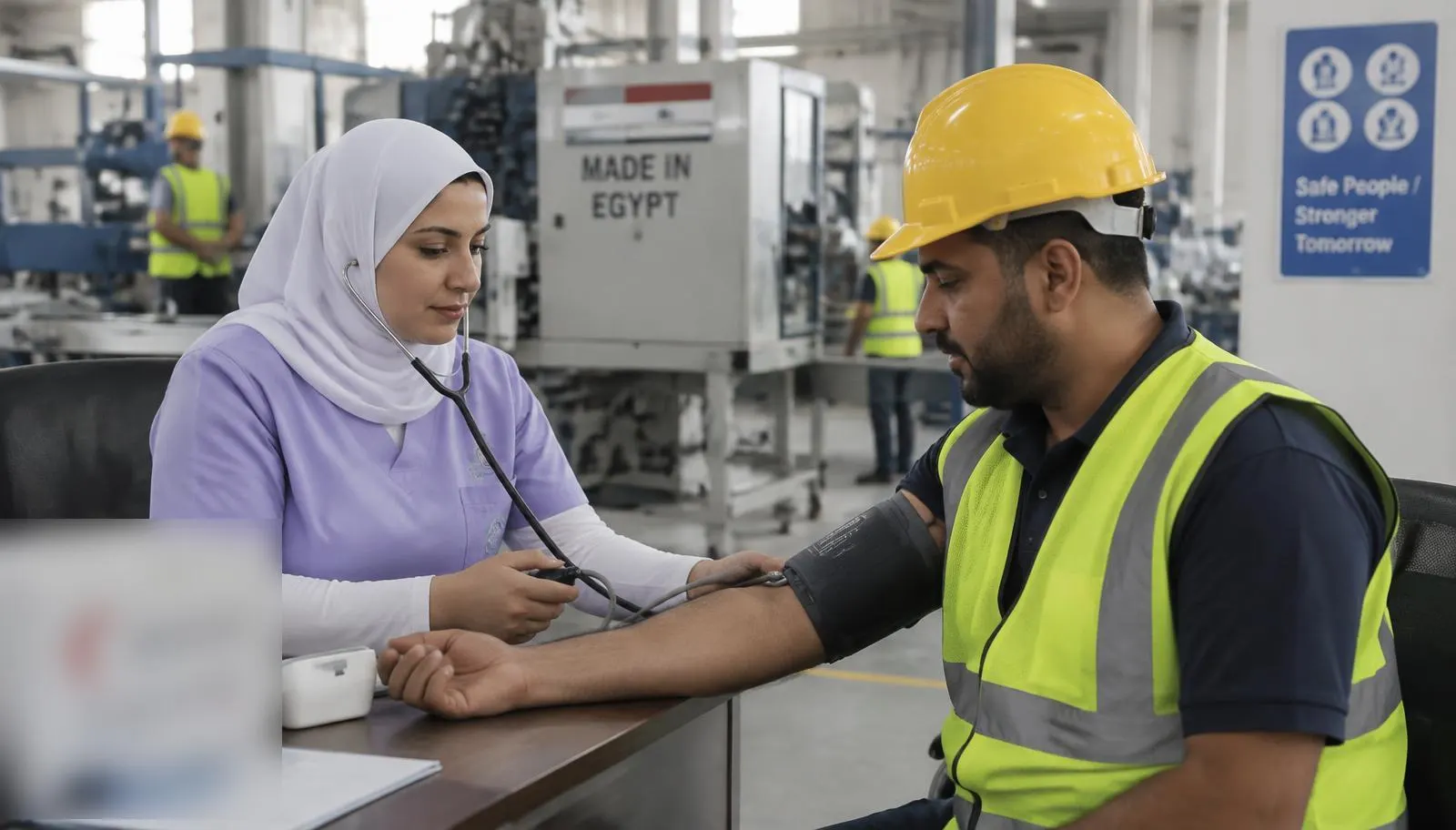
How to Set Up an On-Site Medical Clinic for Employees in Egypt: A Step-by-Step Guide

Quick answer
Set up a workplace clinic by assessing needs, confirming site-specific approvals, preparing suitable premises, agreeing clinical staffing and testing readiness. Launch timing is confirmed after assessment, not guaranteed.
So you've decided an on-site clinic makes sense for your workforce — maybe after reading our breakdown of on-site clinic costs in Egypt — and now you're facing the harder question: where do you actually start? Setting up a company clinic in Egypt touches HR, facilities, procurement, and compliance all at once, and most employers underestimate how many of those pieces have to line up before a physician can see a single employee.
This guide walks through how to set up an on-site medical clinic for employees in Egypt, in the order decisions actually need to happen — not the order a vendor's sales deck presents them in.
Step 1: Define Scope Before You Define Space
The single biggest cause of over-budget, underused clinics in Egypt is skipping this step. Before touring office space or calling vendors, answer three questions:
- What problem are we actually solving? Reducing absenteeism from off-site clinic trips, meeting occupational health compliance obligations, managing a chronic-disease-heavy workforce, or some combination?
- Use site-specific demand and risk data to plan space and staffing, not a generic utilization percentage.
- Do we need continuous coverage or scheduled coverage? A single-shift office of 80 people has very different needs from a three-shift factory of 600.
Getting this scoping step right determines almost every downstream decision — space size, staffing hours, and ultimately your on-site clinic cost.
Step 2: Physical Space Requirements
At minimum, a functional on-site clinic in Egypt needs:
- A private consultation room — enclosed, with a door, for confidentiality during examinations
- A separate treatment/first-aid area — for dressing changes, injections, and minor procedures, ideally not the same space as consultations
- A small waiting area, physically separated from production or office floors where possible
- A handwashing station and basic sanitation setup
- Secure, lockable storage for medication and medical records
- A clinician determines testing from symptoms, exposure and risk. Imaging and ECG are not routine requirements for all asymptomatic staff; sensitive testing needs a lawful basis, consent and safeguards.
Use site-specific demand and risk data to plan space and staffing, not a generic utilization percentage.
Step 3: Confirm site-specific licensing and responsibilities
Verify applicable Egyptian requirements with the competent health authority and qualified legal advisers before opening. Distinguish clinician credentials, the provider’s authorizations and any permissions needed for the employer’s actual premises and service scope.
Contracting a provider does not automatically exempt the employer or site from licensing, occupational-safety or data-protection duties. Record who obtains approvals and how compliance is checked. ILO Convention No. 161 is an international framework, not evidence that a particular Egyptian site is licensed.
Step 4: Choose Your Staffing and Coverage Model
With scope and space defined, staffing is next. The three common models:
Visiting physician model — a doctor attends on a fixed schedule (e.g., 2–3 half-days per week), suited to smaller offices under roughly 150 employees with lower acute-care needs.
Decide from shifts, risks, access needs and actual benefits—not headcount alone. Compare standalone, scheduled and combined services after site assessment.
Hybrid telemedicine + on-site model — a smaller physical footprint (often a nurse or part-time physician) backed by a telemedicine layer for after-hours consults, prescription renewals, and chronic disease follow-up. This model has gained traction in Egypt specifically because it extends coverage hours without the fixed cost of staffing every hour physically — see our deeper comparison in on-site clinic vs. health insurance.
Whichever model you choose, confirm how after-hours and weekend emergencies are handled — this is the single most common gap in clinic setups that otherwise look complete on paper.
Step 5: Equipment, Consumables, and Supply Chain
A baseline on-site clinic setup in Egypt typically includes:
- Examination table and basic furniture
- Blood pressure monitor, thermometer, glucometer, pulse oximeter
- First-aid and wound care supplies
- Basic OTC medication stock
- Secure medication storage (and cold-chain storage if vaccination services are planned — see our corporate vaccination program guide)
- Documentation system for patient records and HR reporting
A clinician determines testing from symptoms, exposure and risk. Imaging and ECG are not routine requirements for all asymptomatic staff; sensitive testing needs a lawful basis, consent and safeguards.
Step 6: Build In-House vs. Contract a Provider
This is the decision point that determines your timeline, your licensing exposure, and ultimately your total cost.
Building fully in-house means the employer directly hires medical staff, manages licensing, sources equipment, and owns ongoing clinical governance (protocols, drug stock management, liability). This path offers maximum control but typically takes significantly longer to set up and carries ongoing administrative overhead most HR teams aren't resourced for.
Allocate responsibilities explicitly, but verify site approvals with the competent authority; a contract does not automatically transfer or remove statutory duties.
Setup timeline: Agree milestones, not a universal deadline
| Milestone | Confirm before proceeding |
|---|---|
| Needs assessment | Workforce, shifts, risks and clinical boundaries |
| Premises and approvals | Suitable space and site-specific authorization |
| Staffing | Credentials, attendance and backup arrangements |
| Equipment | Installation, infection prevention and safe supplies |
| Readiness review | Referral contacts, records, consent and employee communication |
The launch date depends on approvals, fit-out, staffing and scope. Agree a schedule after assessment; no 4–8-week launch or licensing turnaround is guaranteed.
Common Setup Mistakes Employers Make
- Sizing the clinic to current headcount only, with no buffer for planned growth — forcing a costly redesign within a year
- Workplace arrangements may make care and follow-up easier to access. Results depend on scope, participation and clinical needs; measure against a baseline rather than assuming savings or guaranteed outcomes.
- Treating licensing as the provider's problem after the fact, rather than confirming it during vendor selection
- Underestimating medication and consumables run-rate, leading to stockouts in the first month
- Skipping the after-hours coverage conversation, leaving a real gap for night-shift or weekend incidents
Share your site, headcount, shifts and required scope for a tailored proposal. Do not send personal medical records in a business enquiry.
Request a corporate proposalFrequently asked questions
How long does it take to set up an on-site clinic in Egypt?
Space, approvals and timing are site-specific. Verify the actual premises and scope with the competent authority; provider credentials do not automatically authorize the company’s site.
Do I need a special license to run a clinic inside my company in Egypt?
Space, approvals and timing are site-specific. Verify the actual premises and scope with the competent authority; provider credentials do not automatically authorize the company’s site.
What size space do I need for a company clinic?
Space, approvals and timing are site-specific. Verify the actual premises and scope with the competent authority; provider credentials do not automatically authorize the company’s site.
Can we start with a part-time model and scale up later?
Yes, and it's a common path — many employers start with a visiting physician model and move to full-time or hybrid telemedicine coverage as headcount or patient volume grows.
What's the difference between setting up a clinic and setting up occupational health services?
A clinic is the physical/service delivery point. Occupational health covers compliance activities — pre-employment exams, periodic screening, hazard assessments — which can run alongside or independently of a physical clinic. See our occupational health services for factories in Egypt guide for the compliance-specific checklist.