How to Plan an Employee Health Awareness Program in Egypt (Including Shift Workers)

Quick answer
A step-by-step guide for HR and HSE managers: choosing awareness topics from your workforce profile, delivering sessions that shift workers can actually attend, keeping individual health information private, and measuring what a program can honestly measure.
An employee health awareness program is a planned series of short, practical sessions that help staff understand common health risks and where to get care. To work in Egypt, it should match topics to your workforce, run at times shift workers can attend, keep individual health information private, and measure participation honestly.
What an employee health awareness program is (and is not)
Awareness sessions inform. They explain what a condition is, what raises the risk, what early signs deserve a doctor's visit, and what the company offers. They do not diagnose anyone, they do not replace a clinic visit, and they do not by themselves change health outcomes. Screening, vaccination and clinical care are different services, with different consent and privacy rules, and are best planned separately.
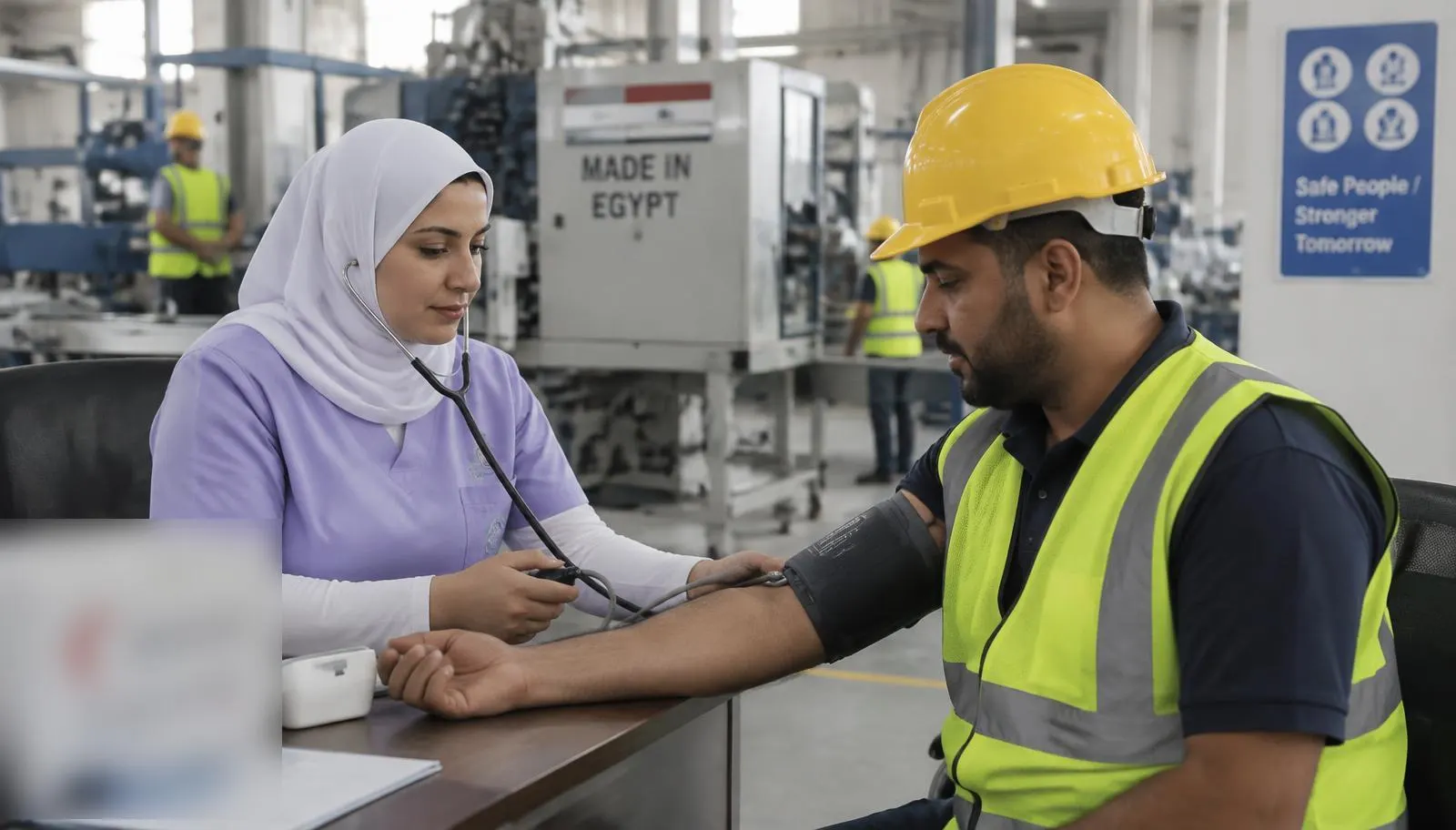
Keeping this boundary clear protects the company and the employees. A session on blood pressure is awareness. Measuring blood pressure for individuals and giving them their own results is screening. If you want both, run them as separate activities, with a private area and individual consent for the second.
Why start with the workforce, not a calendar
WHO's 2010 background document on its healthy workplace framework (technical document, 19 May 2010) states that an estimated two million men and women die each year from occupational accidents and work-related illnesses or injuries, and that 8% of the global burden of disease from depression is currently attributed to occupational risks. These are global figures from formal, registered workplaces, and the same page notes that in many countries a majority of workers are employed informally, so the real burden is likely under-recorded. They are not Egyptian statistics and do not tell you what is most common in your company. We could not open the full framework document, so we do not describe its model beyond the overview.
The practical point is that work itself shapes health. A bank branch, a food factory, a warehouse and a call centre do not share the same risks. Start with a simple profile of your own people:
- Roles and tasks: desk-based, on-feet, driving, outdoors, heavy lifting, noisy or hot areas.
- Schedules: day only, rotating shifts, night shifts, split shifts.
- Where people work: head office, branches, sites, remote locations.
- What your existing records already show in aggregate, such as common reasons for leave, if the company records them lawfully and confidentially.
- What employees ask for: use a short anonymous poll in Arabic.
Health awareness topics for employees: how to choose
Pick three to five topics for the first year, not twelve. Match them to the profile. Examples of topic families that suit many Egyptian workplaces:
- Cardiometabolic health: blood pressure, blood sugar and cholesterol awareness, what to ask a doctor.
- Musculoskeletal health: posture, manual handling, back and neck strain for desk or physical roles.
- Mental wellbeing: stress, burnout signs, sleep, how to ask for support.
- Occupational exposures: heat, noise, dust, driving fatigue, according to the site.
- First aid and when to call emergency services.
- Vaccination and preventive care awareness, including what the company offers.
- Healthy eating and activity in realistic terms, for example on a shift schedule or in a hot summer.
Avoid topics that you cannot support afterwards. Raising awareness about a condition without any route to confirm or manage it can leave people anxious and with nowhere to go. Our related guides cover several of these in depth: hypertension screening, diabetes screening, workplace mental health programs, workplace back pain and onsite physiotherapy, and heat stress for outdoor workers.
Reaching shift workers
Shift workers are the group most often missed by awareness programs, because sessions are held at 11 a.m. in a head-office meeting room. To reach them:
- Run each session more than once, to cover every shift, including the night team, in their working hours rather than before or after.
- Keep sessions to 15 to 20 minutes, ideally at a pre-shift handover or break, on the floor or in a rest area.
- Use clear Arabic, short phrases and pictures, avoiding medical jargon. Offer a one-page takeaway in Arabic that people can keep or photograph.
- Let supervisors attend first, so that attending is clearly allowed and expected.
- Offer recorded or printed material to those who cannot attend, but count them separately from live attendance.
Night-shift staff have particular concerns such as sleep and fatigue, which we discuss in our guide to night shift workers' health and onsite care.
Keep it private
Group sessions should not ask anyone to disclose a condition, and facilitators should not comment on individuals. If an employee asks a personal question, offer a private conversation with the clinic or nurse afterwards. Individual results from any check belong to the employee. Management should see only aggregated figures that cannot identify a person, and only above a group size where nobody can be singled out. Our guide to employee health data confidentiality sets out this principle in more detail.
Check with your legal and HR advisers on consent and employee data requirements that apply to your company in Egypt. We have not verified specific legal provisions for this article, and nothing here is legal advice.
Build the program step by step
- Name an owner and a small working group: HR, HSE or safety, a supervisor representative and, if available, an occupational health clinician.
- Profile the workforce and run the anonymous poll.
- Choose three to five topics and write one learning goal for each, such as "employees can name three situations when they should see a doctor about chest pain".
- Choose the format: floor talks, a short workshop, a printed Arabic leaflet, a poster, a WhatsApp message through an approved company channel, or a themed health month.
- Book the dates in the annual calendar, with repeat sessions for every shift.
- Prepare a route for follow-up: which clinic, nurse or helpline employees can use, and whether the company offers any individual checks.
- Run a short pilot with one site or department, collect feedback and adjust.
- Roll out, review quarterly and refresh topics yearly.
Measure what you can honestly measure
Early on, measure what the program controls: attendance by shift and site, the proportion of sessions repeated for night teams, feedback scores, questions asked, and how many people used the follow-up route. These are process measures. Be careful about claiming health improvements, fewer sick days or financial returns from awareness alone. Many other factors affect those numbers, and a short program may not move them. Report what happened, what you learned and what you will change.
A practical scenario (illustrative)
Imagine a packaging factory with 600 employees outside Cairo working three shifts. This is an illustrative scenario, not a real client. The HR manager wants an awareness month but notes that the night shift has never attended anything. The working group profiles the roles: line operators who stand all shift, forklift drivers, and an office team. A short poll in Arabic shows that back and neck pain, tiredness and questions about blood pressure come up most.
They choose three topics: back and neck care with manual handling tips, sleep and tiredness on shift work, and blood pressure awareness. Each is a 15-minute floor talk at the shift handover, repeated across all three shifts, with an Arabic one-page takeaway. Supervisors attend first. The nurse is available privately in a side room after each talk for anyone who has questions. At the end of the month, HR reports attendance by shift, feedback and the number of employees who used the nurse. It does not report anyone's health information, and it does not claim outcomes. The next quarter's plan adds topics based on what employees asked.
How Hospitalia can support your program
Hospitalia offers employee health awareness programs for companies in Egypt, planned with your HR and HSE teams around your workforce and schedules. Scope, availability and fees are confirmed after an initial discussion. Hospitalia is not an insurer or a third-party administrator, and awareness sessions do not replace screening or medical care. Where you want individual checks as a separate activity, they can be arranged separately with the consent and privacy arrangements described above.
Frequently asked questions
What is an employee health awareness program?
A planned series of short sessions and materials that help employees understand common health risks, early warning signs and where to get care. It informs; it does not diagnose or treat.
What health awareness topics suit employees in Egypt?
Choose from your workforce profile. Common families are blood pressure and blood sugar awareness, back and neck care, stress and sleep, heat and noise exposure, first aid, and vaccination and preventive care.
How do we include night-shift and rotating-shift workers?
Repeat each session for every shift, hold it during working hours at handover or breaks, keep it to 15 to 20 minutes, and use clear Arabic with a one-page takeaway.
Should managers see employees' health information?
No. Individual information stays with the employee and the clinician. Management should receive only aggregated figures that cannot identify anyone.
How do we measure whether the program works?
Start with process measures such as attendance by shift, feedback, questions and use of follow-up services. Be cautious about claiming health, absence or cost outcomes from awareness alone.
Is an awareness program the same as a medical screening day?
No. Awareness informs groups. Screening involves individual measurements, consent and private results, and should be planned as a separate activity.